In a case – built on a pattern of false claims, selective memory, and misrepresented facts – their lawyer did something so bold, so on-brand, it practically wrote itself.
Right there in open court, in front of the judge, the lawyer… misrepresented the record.
Yes. In a proceeding where I accused the board of manipulating facts to crush dissent and silence accountability, the lawyer defending them did exactly that.
📜 But wait – there’s a subtle nuance for that.
According to the Law Society of Ontario’s Rules of Professional Conduct, Rule 5.1-2 states:
“When acting as an advocate, a lawyer shall not knowingly misstate the contents of a document, the testimony of a witness, the substance of an argument, or the provisions of a statute or like authority.”
Simple, right?
Apparently not.
Because when I pointed out the misrepresentation – calmly, factually – the lawyer explained to the judge that I simply didn’t understand the “nuance” of legal advocacy. You see, I’m not a lawyer, so I just don’t grasp that misstating the record isn’t misrepresentation – it’s strategic condensation. Or creative abbreviation. Or maybe it’s a minimalist homage to due process.
And if that weren’t enough, he blamed the misrepresentation on page limits.
Yes. Page limits.
Apparently, constrained by word count, he had no choice but to leave out material facts, reframe events, and omit key evidence. Not to misstate the record – no, no – just to stay within the formatting rules.
It’s like saying, “I didn’t lie, Your Honour – I just edited aggressively.”
🎭 The Irony Hits Peak Performance
This wasn’t just an alleged pattern. It wasn’t speculative. They did it right there, in real time, before the judge – while defending against a claim that they fabricate and misrepresent.
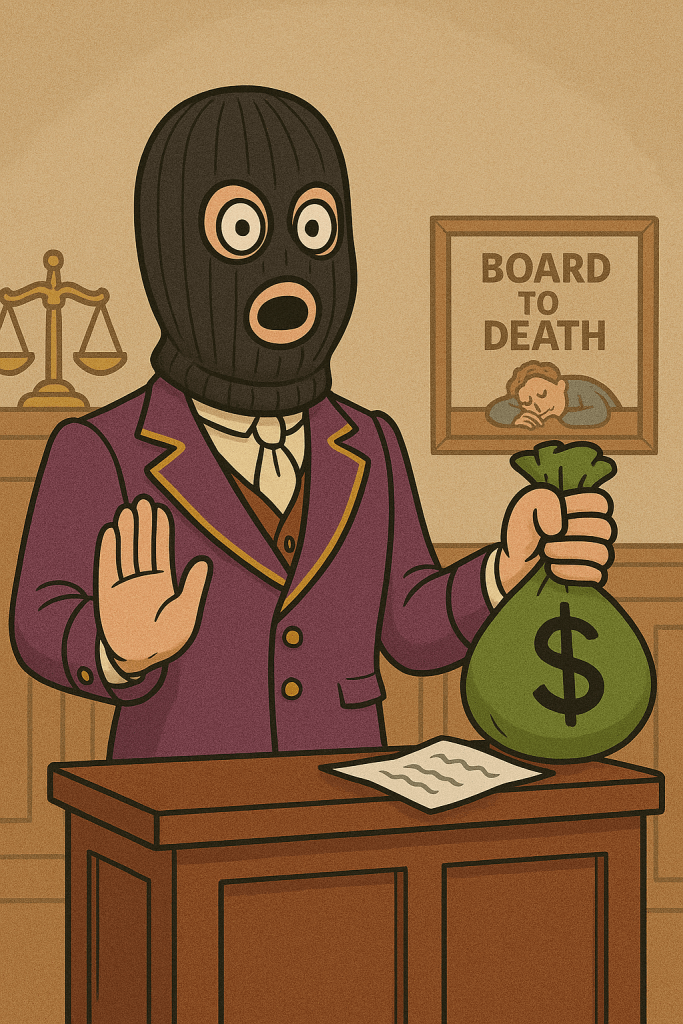
It’s like being on trial for bank robbery and showing up with a ski mask and a bag of cash.
🧾 I Keep Receipts
I don’t accuse lightly. I document. I cite. I quote. And I’ve lived the consequences of a board that believes truth is optional, rules are ornamental, and lawyers are there to polish the story, not uphold the law.
So no, I will not apologize for telling the truth – especially not in a courtroom.
And I certainly won’t be gaslit into silence by someone claiming it’s improper to correct a public misstatement made in front of a judge.
Because unlike their minutes?
I don’t edit the facts.
Disclaimer: This post is satire and opinion. Read full disclaimer.
