You’d think that running a condominium would be relatively straightforward: collect fees, fix the pipes, follow the law, and maybe-just maybe – share records with the people who actually pay for them.
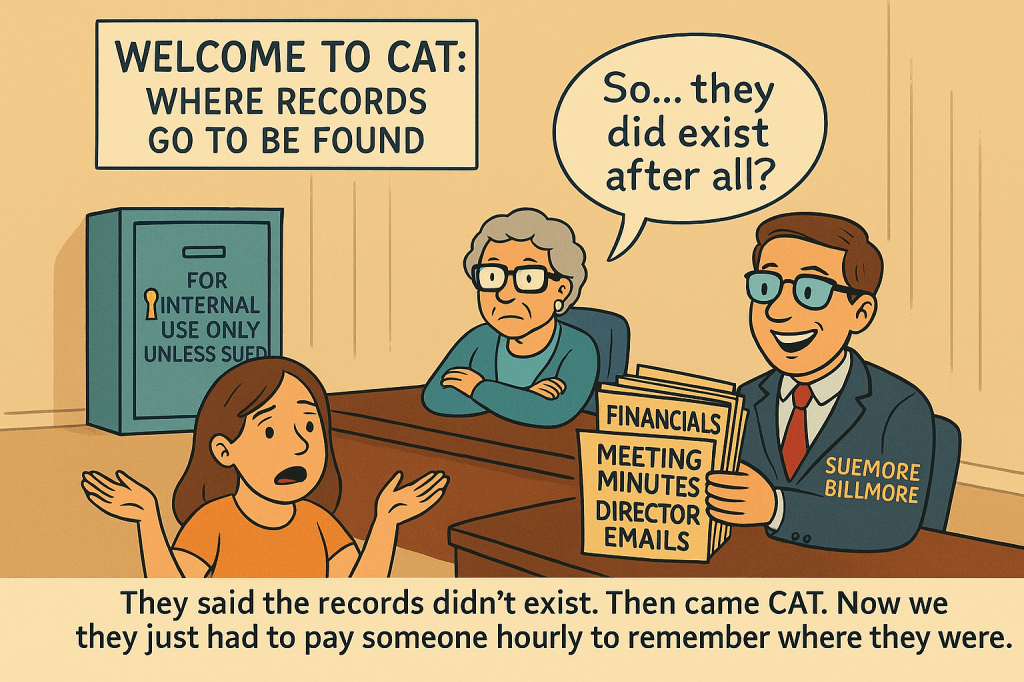
But not here. No, at Blenvale, we have a time-honoured tradition: refuse records, lawyer up, lose at CAT, and then- only then– release what should have been disclosed in the first place.
Welcome to Reverse Transparency, where the Board guards documents like they’re state secrets, and the only way to access basic information is to enter the Coliseum of the Condominium Authority Tribunal.
Every time I ask for records- financials, meeting minutes, budget memos, director communications- there’s a sudden outbreak of selective amnesia. Responses range from “these don’t exist” to “we won’t confirm whether they exist,” to “submit another form and wait 30 days while we consult a legal oracle.”
And then, like clockwork, we end up before CAT. And there, under the bright lights of legal scrutiny, something miraculous happens:
📂 The records materialize.
Just like that. From the ether. Unconfirmed documents suddenly become confirmable. Non-existent ledgers mysteriously exist. And the Board, now represented by their ever-faithful scribes at SueMore & BillMore, graciously hands over what should have been disclosed months ago.
All it costs?
Thousands in legal fees – paid, of course, by you, the owners.
Why follow the simple principle of the Condominium Act, 1998 – that corporations should operate like “open books” – when you can instead fund a part-time law firm and reenact “The Da Vinci Code” every time someone requests a spreadsheet?
Here’s a revolutionary idea: follow the law the first time.
No lawyers. No CAT. No billable hours. Just transparency, like the Act intended.
But then again, where’s the drama in that?
🧾 Coming Soon: “Freedom of Information? We Thought You Said Fictional Information.”
Stay tuned for the next thrilling episode in Board to Death.
Disclaimer: This post is satire and opinion. Read full disclaimer.
