🎭 Translation: “We drained the account, but we’d rather you didn’t call it that.”
🧾 The Evidence They Can’t Deny
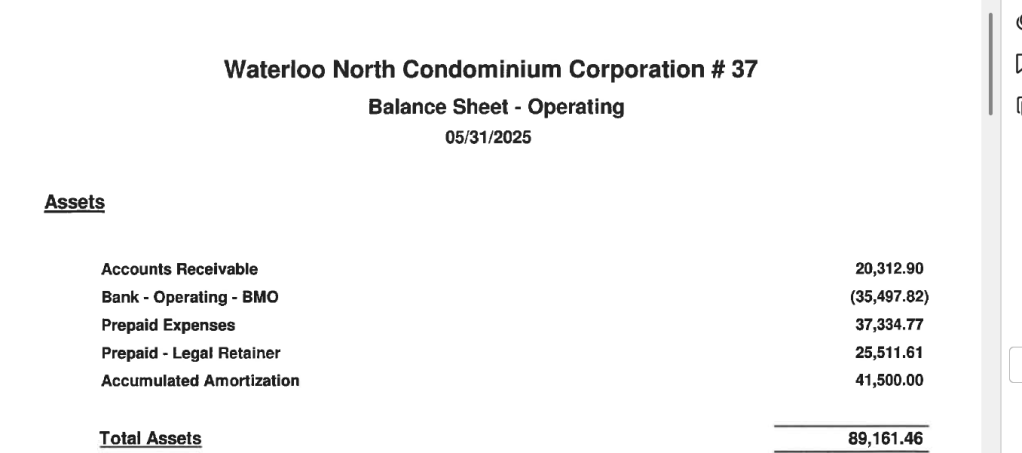
The corporation’s own financial statements show that the operating account went negative That’s not a rumour, not an interpretation, not gossip – it’s basic accounting.
So when the moderator or management said the “bank wasn’t really in overdraft,” what they meant was:
“Yes, we spent more than we had, but the bank didn’t technically flag it because we juggled accounts behind the scenes.”
That’s not transparency. That’s financial gymnastics.
🔍 Where It Shows the Overdraft
In the Statement of Financial Position (Balance Sheet), you’ll see a line under Assets or Cash and Bank Balances that looks something like this:
Operating Fund – Bank:$(35,497.82)
That bracketed number is the smoking gun. Just google it and see that I am correct. Accounting convention uses parentheses to indicate anegative balance, which in banking terms means the account was overdrawn.
That is an overdraft – plain and simple. The “bank not really in overdraft” claim is semantics. The account balance itself was below zero. The only way that’s “not really” an overdraft is if someone is playing games with definitions.
💡 The Translation
Here’s what “overdraft” really means in plain English: You ran out of money. You dipped below zero. You spent what you didn’t have.
If this happened in your personal bank account, the bank would charge you overdraft fees. In a condo corporation, you – the owners – are the bank. The “fee” comes later, disguised as a special assessment.
💬 Final Word
So when the board stood up and swore the account was never overdrawn, that was Lie No. 7 in our growing series of financial fairy tales.
If your condo’s account goes negative, and the board tells you it didn’t, you’re not living in a “community.” You’re living in a cover-up.